

Guests are no longer searching for novelty alone — they are searching for experience, design and comfort. For farmers, estate owners and hoteliers considering glamping lodges, understanding these evolving expectations is critical.
A successful lodge is no longer simply accommodation. It is architecture, branding and commercial strategy combined.
Here are the design trends shaping premium glamping lodges in 2026 and beyond.
Today’s travellers are drawn to lodges that feel intentional and refined.
Clean lines.
Striking roof profiles.
Full-height glazing.
Thoughtful material choices.
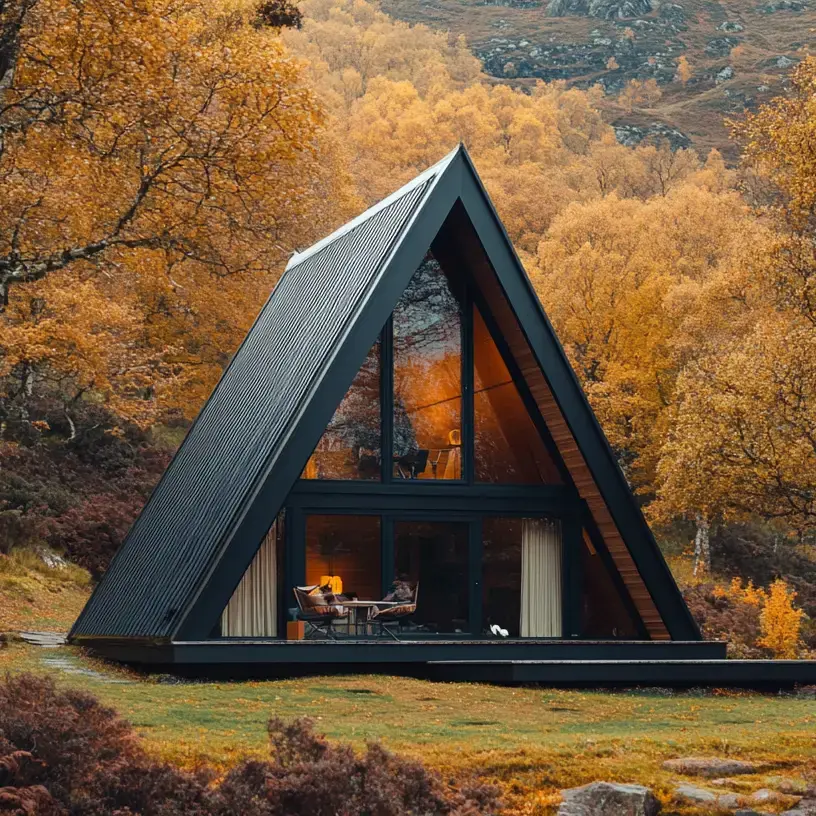
From contemporary A-frame lodges to minimalist pitched-roof forms, guests are responding to distinctive architecture that sits confidently within the landscape.
For operators, this matters commercially. A lodge that photographs well commands higher nightly rates and drives social sharing.
Design is no longer aesthetic alone — it is marketing.
Connection to landscape is one of the strongest drivers in luxury glamping.
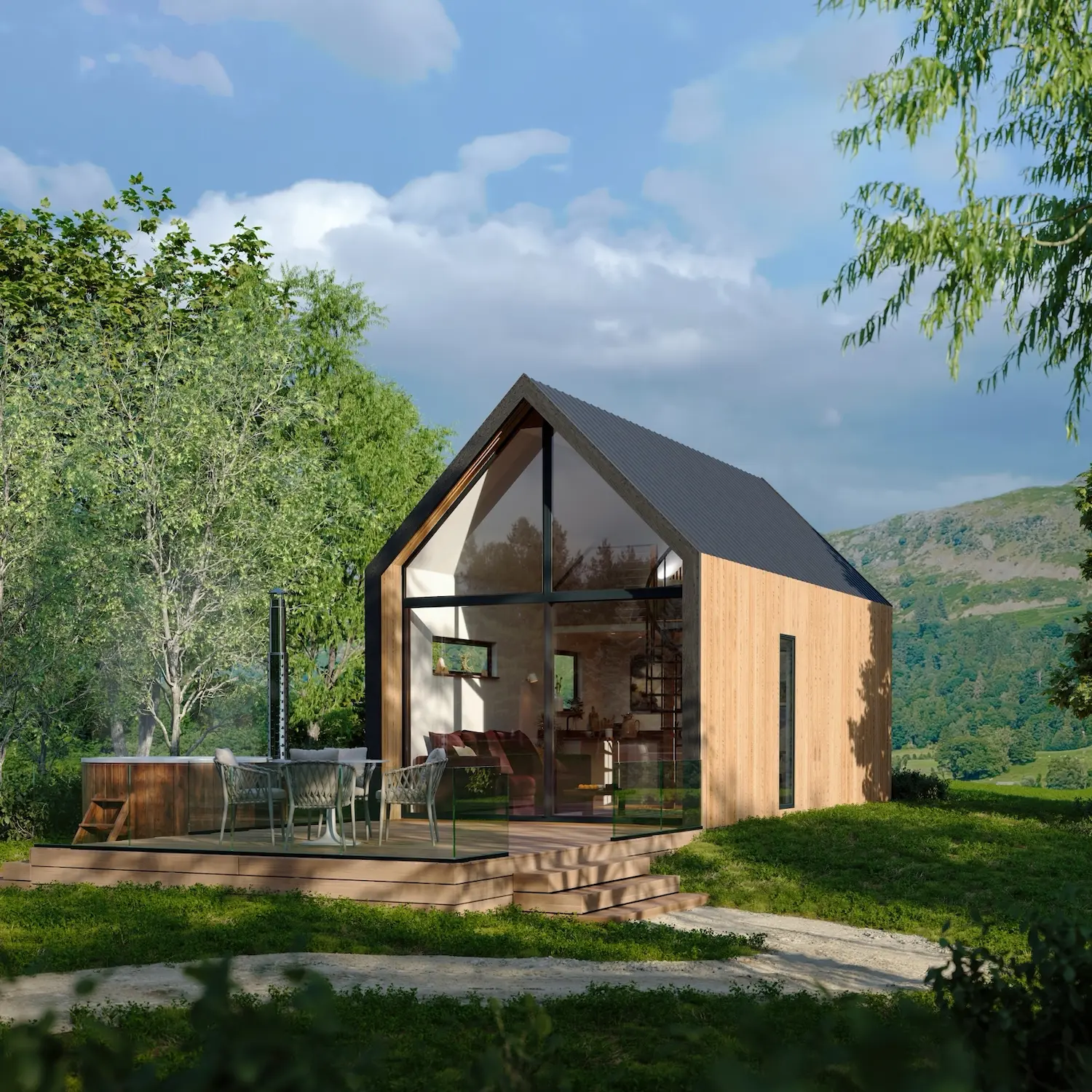
Large-format glazing, gable-end glass panels and sliding doors are increasingly expected in premium glamping lodges. Guests want to wake up to countryside views without sacrificing warmth or comfort.
High-performance SIP construction makes this possible — delivering the thermal efficiency required for year-round operation, even with expansive glazing.
The result is immersion without compromise.
Seasonal pods are being replaced by fully insulated, residential-standard lodges.
Today’s guests expect:
For landowners and hoteliers, this trend is commercially significant. A lodge built using structural insulated panels (SIPs) allows year-round trading, increasing occupancy and smoothing seasonal revenue.
Performance is now a core part of design.
Modern travellers value sustainability — but not at the expense of quality.
Luxury timber cladding, black vertical detailing, standing seam roofing and carefully considered external finishes are defining the current aesthetic of high-end glamping lodges.
The trend is towards:
These choices elevate a lodge from “holiday unit” to “boutique retreat.”
Space efficiency remains essential, but layout design has evolved.
Open-plan living areas with vaulted ceilings create volume without increasing footprint. Mezzanine bedrooms maximise sleeping capacity while preserving architectural drama.
Thoughtful zoning — living, dining, cooking and sleeping — ensures even compact lodges feel spacious.
This is particularly important for rural diversification projects, where planning sensitivity and land use must be balanced with profitability.
Wellness tourism continues to grow, influencing glamping lodge design.
Features increasingly requested include:
These elements transform a lodge stay into an experience — encouraging repeat bookings and premium pricing.
For estate owners and hoteliers, wellness-led design strengthens market differentiation.
Environmental awareness is no longer optional.
Guests are drawn to glamping lodges that demonstrate:
SIP construction supports this shift by delivering exceptional insulation performance and reduced operational energy demand.
A well-built lodge not only lowers running costs — it aligns with the values of modern travellers.
Trends evolve, but quality endures.
At Heritage Lodges, part of Heritage Living Group, we design and manufacture premium SIP-built glamping lodges that combine architectural integrity with commercial intelligence.
For farmers, estate owners and hoteliers, the objective is not simply to follow trends — but to build structures that:
If you are exploring a glamping lodge for rural diversification, estate enhancement or hospitality expansion, the first step is understanding what today’s market truly expects.
We work with landowners and operators across the UK to design contemporary glamping lodges built for performance, longevity and refined guest experience.
A considered design today shapes profitability tomorrow.